
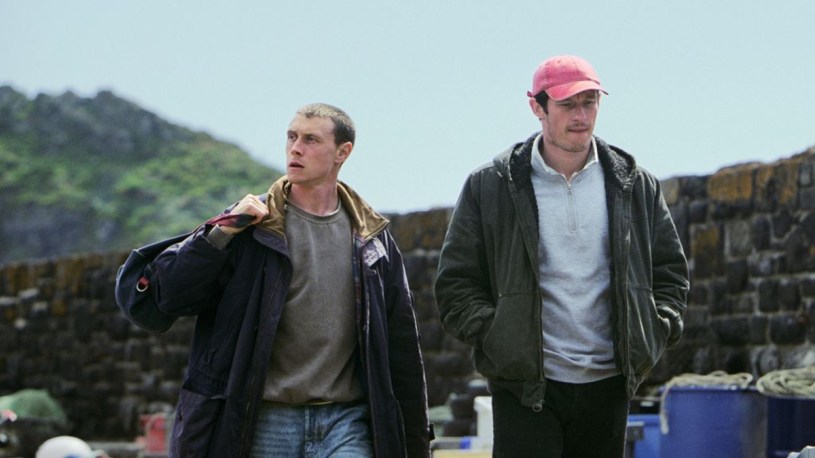
Nobody makes films like Mark Jenkin. His 2020 film Bait burst onto the British film scene with its homemade aesthetic, grassroots filmmaking style, and culturally important message. His follow-up, 2022’s Enys Men, retained his directorial spark but veered more towards The Wicker Man-style cult horror. With Rose of Nevada, we’re back to Jenkin covering the topics, regions, and occupations he knows so well – and it’s yet another demonstration of his deft, singular style.
Unlike both Bait and Enys Men, which were comparatively low-budget and indeed low-key affairs, Rose of Nevada has loftier ambitions. While long-term collaborators like Edward Rowe and Mary Woodvine are still here to make up the supporting cast, the real stars of the show are veritable Hollywood A-listers George MacKay and Callum Turner. It’s one of the major tensions that Rose of Nevada has to deal with: taking the work of a filmmaker so closely associated with the DIY scene and reckoning with more influence and instantly recognisable faces.
To tackle this challenge, Jenkin places MacKay and Turner in the most uncomfortable circumstances possible: a seemingly liminal fishing boat in a quiet Cornish town. Both are incongruously young and directionless, with the sudden return of the eponymous boat giving them an opportunity to earn some money. What you think will play out as a Jaws-style sojourn at sea becomes something a lot more dystopian, as the two find themselves returning to circumstances very different to what they expected.
We’ve already seen Jenkin try his hand at surrealist drama and folk horror, and with Rose of Nevada, temporal sci-fi is next on the list. It’s a typically subtle approach, where the Interstellar-style time loops and paradoxes are handled with an air of bafflement rather than self-serious exposition. It’s less about what has changed when MacKay’s Nick and Turner’s Liam return, but more how they acclimate to a significantly different environment where the goalposts have entirely changed. It’s the most daring narrative swing Jenkin’s taken yet – not necessarily eschewing the realism that makes his work so memorable, but peppering it with an uncanniness that opens up plenty of room to unpack the two leads.

One understandable concern going into Rose of Nevada was how it would look. Jenkin’s films are known for their analogue nature: reels processed by hand, boxy aspect ratios, and no diegetic audio, it all being recorded retrospectively. It’s reassuring to see his style remain exactly the same here, even as the audiences grow and the cast becomes flashier. It’s something Jenkin himself clearly isn’t willing to compromise, either. He revealed how the film’s major set piece, a bombastic storm at sea, was done almost entirely in-camera with wave machines to make choppy waters and jet-skis for propulsion. Seeing the logistics of his filmmaking approach stretched as the scope of his films increases is one of the joys of Rose of Nevada.
That’s not to say that its leads aren’t magnetic, either. Both MacKay and Turner have clearly bought entirely into Jenkin’s style, adapting to the often monosyllabic dialogue, stolid body language, and painstaking detail. MacKay is especially good as Nick, whose more conflicted, anxiety-addled mindset is a stark contrast to the swagger and warm embrace of Liam. Their relationship veers between codependency and real animosity on a whim, given the tension of their situation, and both capture the two different emotional responses to a fish-out-of-water situation.
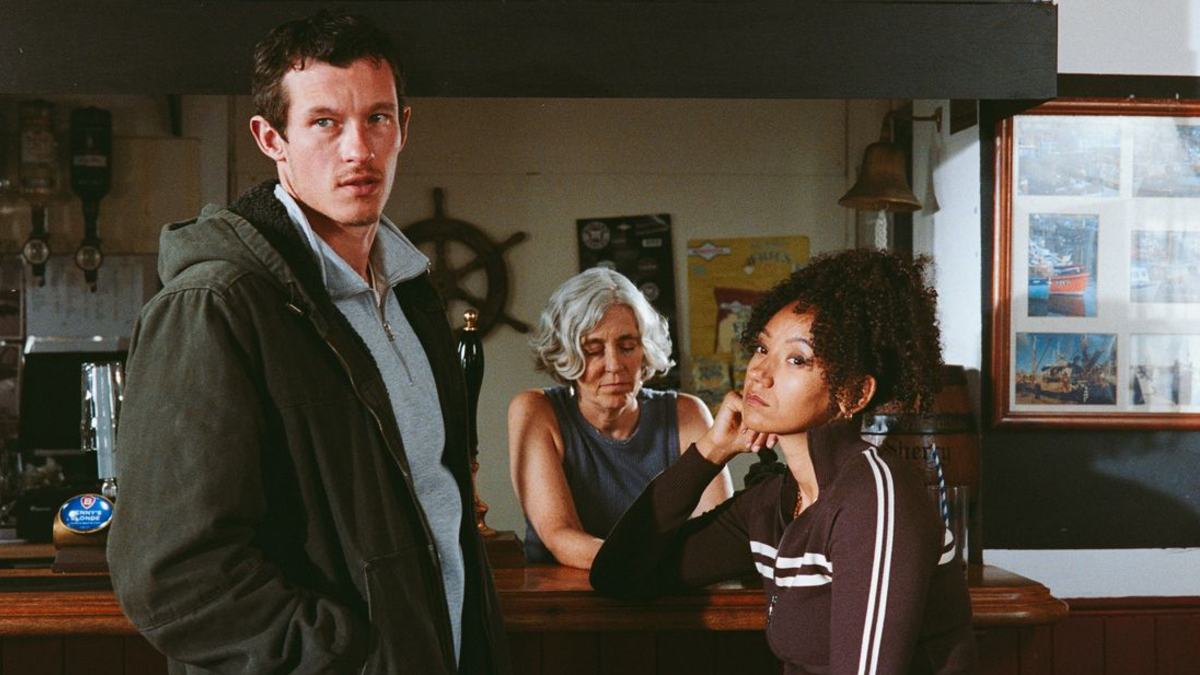
But as with all of his films, it’s Jenkin himself who is the real star of the show. It’s so gratifying to see no kind of dilution of his analogue style despite the vastly increased scope on display, and even a boldness to tell new kinds of stories that still share DNA with the films that propelled him to stardom. He’s truly one of the nation’s most singular filmmakers – and with Rose of Nevada, it’s clear that no challenge is beyond his abilities.
Rose of Nevada feels like a real return to form for Jenkin after Enys Men, which felt more obtuse and less digestible than what’s on display here. Combining the Cornish setting and local industry of Bait with the Lynchian liminality and intangibility of Enys Men, it’s a real victory lap that shows just how deftly he’s handling his rise to one of British cinema’s most important voices.
★★★★
Rose of Nevada releases in UK cinemas on April 24, 2026.
 thatfilmbloguk