

It’s incredibly hard for road trip films to stand out. The very nature of their structure means that excitement can only really take place during any number of stopovers, and even then you need to care enough about the characters to buy in. Drive Back Home manages to eschew these genre conventions, telling a unique, powerful, but purposefully messy story in the meantime.
Set in 1970s Canada, at a time where homosexuality was still criminalised, the film stars Charlie Creed-Miles as Weldon, a gruff mechanic in a sleepy rural town. He’s called into action when his brother Perley, played by Alan Cumming, is arrested in Toronto and needs to be picked up. What follows is, fittingly, a drive back home as they navigate casual homophobia and grow closer by addressing some of their shared trauma.
The main reference point I took from Drive Back Home is David Lynch’s under-seen 1999 film, The Straight Story. While that film followed Richard Farnsworth’s character crossing the United States to see his brother, Drive Back Home is practically the opposite, focusing on the return leg. This gives Weldon and Perley plenty of time to interact and learn from one another, especially as the latter spends most of his time away from a family that still harbours significant prejudice – and a very dark history in terms of how Perley was treated.
However, Drive Back Home isn’t clear-cut enough to pretend that these eye-opening conversations of acceptance and mutual understanding happen effortlessly. Director Michael Clowater is wise enough to convey that for a long while, neither of them know how to even interact with one another. There are plenty of jump cuts during driving montages to suggest that nothing of note has taken place, which creates this sense of vacuous yearning: that a conversation needs to happen, but neither of them knows how to initiate it.
It’s anchored in large part by an electric Alan Cumming performance, who instantly adds so much life to the film with his Pacino-like screen presence. Perley is simply a fascinating man: he’s clearly bound by so much insecurity that he tries to compensate for, and his past experiences of homophobic abuse are told with sensitivity but equally in an unflinching manner.
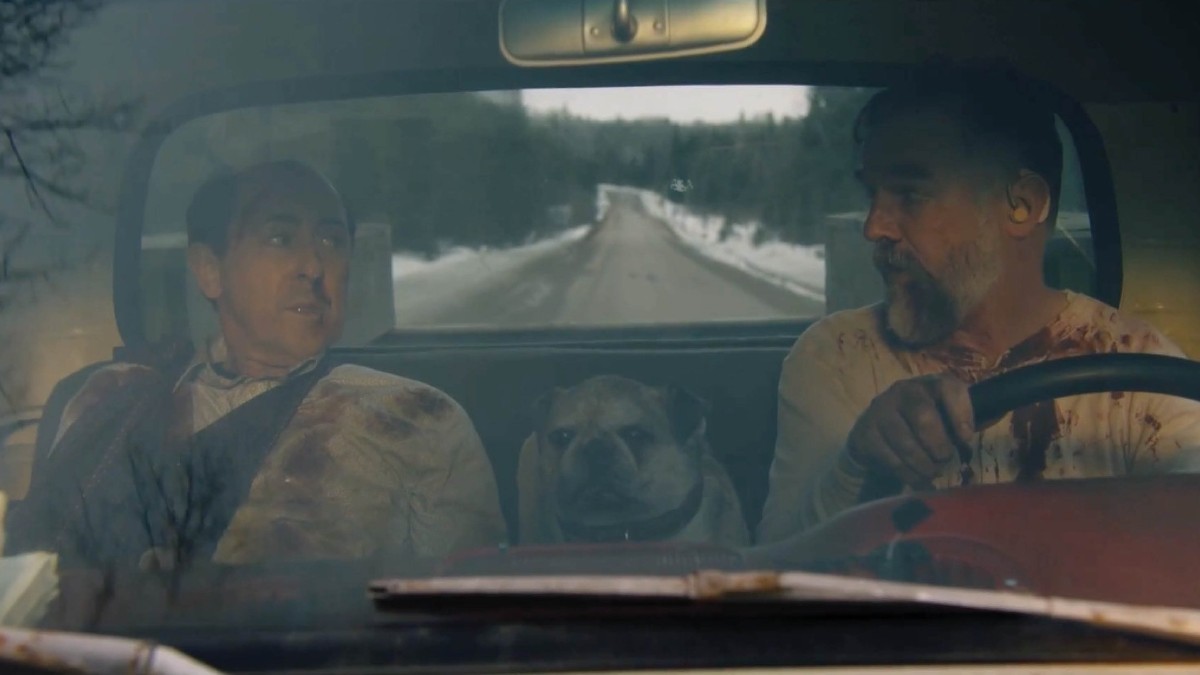
It’s a film whose message is somewhat frustrating, especially towards the end, with something of a “straight saviour” narrative that while likely in accordance with the time period and circumstances, can’t help but feel somewhat muzzling to its overall message. At its core, though, are two brothers who learn a lot from each other with the kind of sexuality dynamic rarely explored in cinema.
Drive Back Home is much bleaker than its initial setup suggests, but the story’s emotive power shines through and ultimately feels akin to something by the Coen brothers. Its message isn’t perfect, but Drive Back Home is a subversive road trip film that completely earns its emotional peaks.
★★★
Drive Back Home screens at the BFI Flare Festival on March 23 and 25, 2025, with tickets available here.
 thatfilmbloguk