
One Potato, Two Potato is a film far ahead of its time. While more than six decades have passed since it released, the racial politics and inequalities that Larry Peerce’s film explores are just as topical today. For that reason, its bold message papers over the creaky characters and thin narrative.
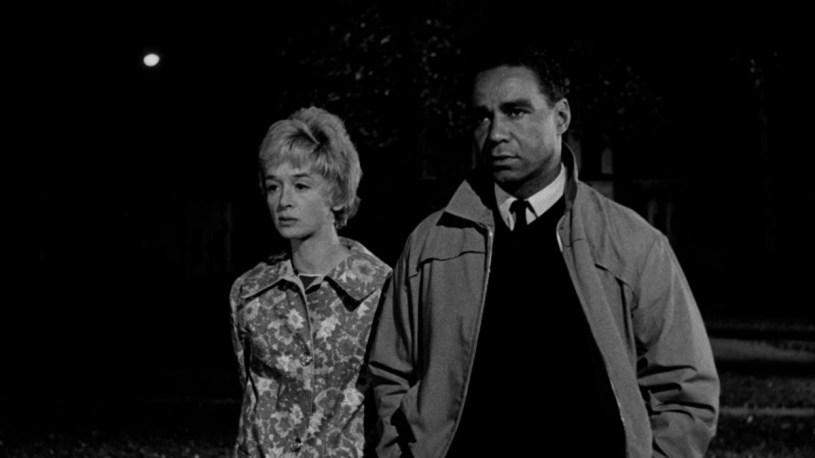
The film principally follows Julie (Barbara Barrie), who falls in love with Frank (Bernie Hamilton), her Black co-worker. Theirs is a romance that almost everyone around them disapproves of, from Frank’s parents to the local police. What we witness is an attempt to navigate their love in a time when such interracial marriage was still illegal in many US states, with so many factors working against them.
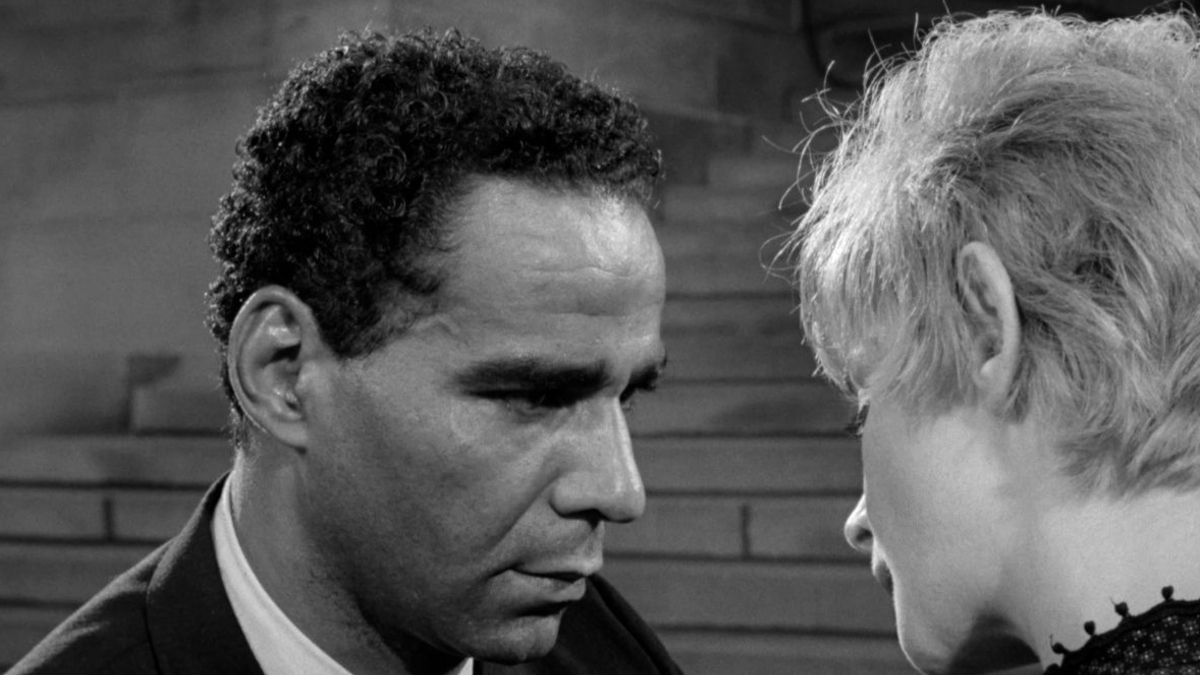
While the plot is undeniably simple, it’s easy to forget how ground-breaking One Potato, Two Potato was for its time. This kind of story simply wasn’t told at the time, so for it to receive an Oscar nomination for Best Original Screenplay and win Best Actress at Cannes is proof of the boundaries it burst through. Some of its arguments have gone on to become prevalent in films tackling racial issues, from a distrust of the police to the common, everyday prejudice that is often harder to spot but still insidious.
Director Peerce isn’t afraid to plunge the depths of darkness to convey just how doomed Julie and Frank’s love is, either. The film is no fairytale, and there are some brave narrative swings – particularly towards the end. Its second half turns into a To Kill a Mockingbird-style courtroom drama as Julie and her snide ex-husband Joe (Richard Mulligan) fight for custody of their daughter, and it’s here that the One Potato, Two Potato really shows its hand.
So much of 1960s Hollywood was idealistic – it was just before the new generation of Coppola, Lucas, and Spielberg revolutionised cinematic storytelling – but One Potato, Two Potato is boldly and proudly contrarian in this regard. Just as America hasn’t been able to shirk its troublesome racial history, the film makes no attempts to sugarcoat the apparatus working against a couple whose only desire is to love one another.

Hamilton is particularly good at conveying Joe’s simmering frustration but resolute level-headedness in the face of such hardship, even if the script doesn’t give either of its leads too much emotional material to work with. His father William, portrayed resolutely by Robert Earl Jones (father of James), is arguably the film’s most interesting character, however.
While most films of this nature would focus on the white family’s reaction to an interracial relationship, One Potato, Two Potato explores Frank’s parents and their issues with it. It’s frankly a much more interesting and nuanced perspective, seeing William’s defensiveness and justified concern for his son given the political climate. These are the kind of perspectives that few of its contemporaries explore, which makes the film so much more valuable.
That said, it’s often better as a piece of cinematic history than a film itself. The story is fairly barebones on a narrative level, and it plays out in rather rudimentary fashion. One Potato, Two Potato is far more interesting as a political argument than a piece of entertainment – the kind of thing deified in retrospect but less than the sum of its parts while you watch it.
None of that is to say that you shouldn’t seek out One Potato, Two Potato, however. What it lacks in sheer cinematic rubric it makes up for in the boldness of its ideas and its unflinching commitment to its argument. It’s an experience that’s far ahead of its time politically, with ideas that are remarkably potent to this day.
★★★
One Potato, Two Potato releases on Blu-ray, DVD, and digital from STUDIOCANAL Vintage Classics on October 13, 2025.
 thatfilmbloguk