

In a Year of 13 Moons is the first film I’ve seen from Rainer Werner Fassbinder – and in the context of his short but meaningful filmography, one of the most pertinent. After all, he ranked it second out of all of his work, giving it an esteemed reputation – and that might be part of my problem with the film. What on paper should be an intriguing look at the trans experience in 1970s Germany ends up feeling floaty when it should instead be incisive.
The film stars Volker Spengler as Elvira, a trans woman who was formerly a butcher. Prior to her transition, she was in a relationship with the high-profile property magnate Anton Saitz (Gottfried John), but he sent her away for several years. During this period she underwent her transition, and in the years since has ambled through life aimlessly, flitting between cruel lovers and a life of sex work. In a Year of 13 Moons takes a Sean Baker-style of near documentary following of Elvira’s life, showing its mundanity and cruelness in equal measure.

In a Year of 13 Moons is, ultimately, a film with very few redeeming characters. After all, it was inspired by the suicide of Fassbinder’s then-lover Armin Meier, so it’s not too surprising that the film is relentlessly and punishingly bleak. When we first meet Elvira she is being assaulted by a group of men on the street, and things don’t get better from there: friends betray her, lovers abandon her, and the finality of death is something that she doesn’t fear herself, or hold any remorse in pushing upon others. It’s an inherently cruel film where nobody comes out well – the only innocent characters here are Elvira’s former wife and child, whom I would’ve loved to learn more about.
That said, this nihilism is all a consequence of focusing on the trans experience of nearly five decades ago. It’s not meant to be anything other than ceaselessly miserable and hopeless, because that’s how people like Elvira lived.
My issue isn’t necessarily with the film’s nihilistic tone – rather, I find that sometimes the ideas it wants to convey are done so in an unsubtle and floaty fashion. There’s one incredibly infamous seven-minute scene that follows the production line at a slaughterhouse, replete with incredibly visceral scenes of live animals dying and being carved apart. The link between this objectification and Elvira’s transition (something that seems thrust upon her, like The Skin I Live In) is clear, but in other cases the film meanders around its points.
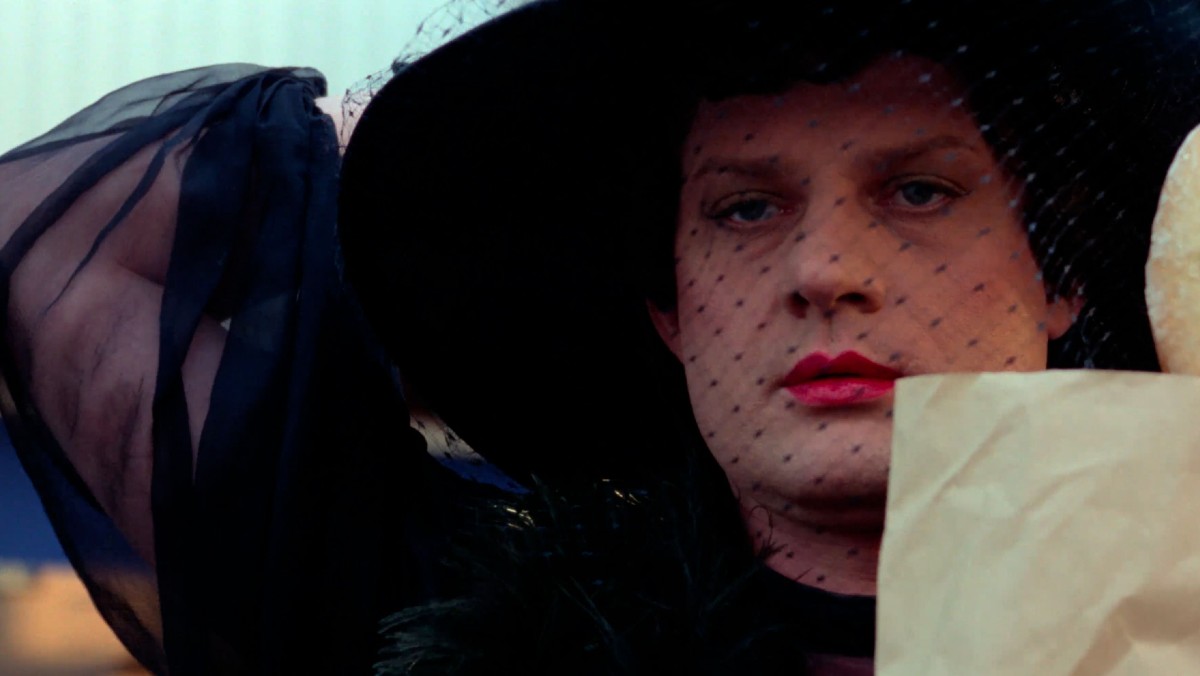
For example, we’ll often get incredibly long scenes of people spelling out their backstory rather than learning about each character organically, even if these extended shots are technically impressive. It leaves you feeling just a bit more detached from each character, as if we’re observing rather than learning – something Fassbinder visually toys with by constantly showing people watching TV.
For as much visual flair and occasional sprightliness that crops up in In a Year of 13 Moons, the overriding emotion I felt was one of disconnection. Fassbinder’s frank portrayal of the early trans experience is undeniably fascinating, but it’s told in a way that rarely allows its performances to shine or its more interesting ideas to be fully explored. Whether intentional or not, the result is a film that feels fragmented, delirious, and strangely banal.
★★
In a Year of 13 Moons is out now on DVD and Blu-Ray from StudioCanal Vintage World Cinema.
 thatfilmbloguk