

More than any other franchise, I’m a sucker for DC Comics. That’s less the side of reading comics and following individual arcs themselves, but instead consuming all the tangential media I can – be it films, video games, TV shows, or even real-life exhibitions. That’s why, when I was looking for a new TV series to dive into earlier this year, I picked Superman & Lois.
Broadcast on The CW since 2021, the show is a spin-off of Tyler Hoechlin’s iteration of Superman introduced in the DC show Supergirl, then expanded upon in Arrow‘s Crisis on Infinite Earths storyline. It was intended to be an Elseworlds-style spin-off to start with, before showrunner Todd Helbing ultimately decided to retain the core actors but set it in its own continuity. Without any other shows to align its narrative and characters with, it’s been afforded the freedom to introduce everyone from Lana Lang to Lex Luthor, Doomsday, and even Bizarro.

It’s a perfectly fun, bubbly show that captures the boy-scout nature of Superman but doesn’t reinvent the wheel of superhero TV, especially with the likes of The Penguin to compare alongside it. But that isn’t my issue—rather, it’s the fact that the current fourth and final season is entirely inaccessible to watch in the UK.
Of course, this isn’t a new phenomenon. In fact, it’s still pretty common for shows broadcast in the US to take a little while to make the transition across the pond. The same happened for the recent Ted show, which took almost a month to land on Sky and NOW TV after it released on Peacock in the States. For the case of the third and final season of Chucky, it still hasn’t received a proper UK broadcast despite airing almost a year ago, only available to buy physically if you want to see it.
While TV watchers in Blighty have understandably become accustomed to these extended wait times for their favourite shows, it’s now becoming less and less frequent to have to wait, which makes those rare exceptions all the more frustrating.
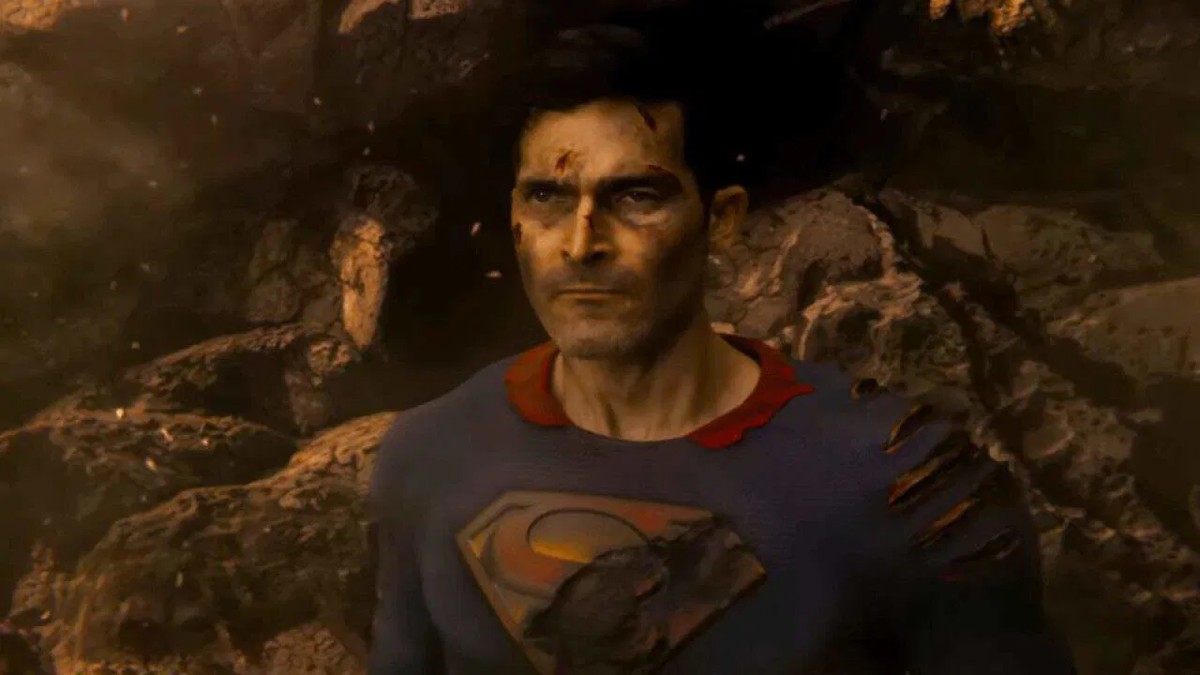
The concurrent release patterns we’re now used to arguably started thanks to Game of Thrones on Sky Atlantic. Episodes would air at around 2am in the UK, exactly the same time they were transmitted on HBO in the US, landing on demand straight after. It meant that delay didn’t exist any more, and what was once exclusively appointment viewing in America could now take on that same significance in Britain. It’s a trend that has only proliferated with the rise of streaming, where shows launch at a uniform time across the globe to ensure nobody’s missing out. Even looking at it right now, the likes of Dune: Prophecy and The Creep Tapes are two current shows that are just as readily watchable in the UK as they are in the US.
That’s where my issue lies around Superman & Lois. The previous three seasons are all accessible on BBC iPlayer—which is handy and, to me, a good use of the license fee—but there has been no communication so far about when, or even if, the fourth and final season will follow suit.
Ultimately, all it does is push dedicated audiences—who would willingly pay to watch Superman & Lois legitimately—to finding alternate ways of watching. It’s never ideal, but in a landscape where any key plot point is spoiled nearly instantly on social media, it’s hard to find a more ethical way around it.
And that’s a shame, because this final season of Superman & Lois has been one of the show’s very best. The long-brewing conflict between Lex Luthor and the eponymous couple has finally come to a head in a really character-driven way, cleverly harnessing the network TV budget to eschew bombastic action scenes and zero in on emotional stakes instead.

Especially with James Gunn’s reboot of Superman landing next year with David Corenswet donning the iconic blue and red suit, it feels like a really fitting curtain-closer not only to this version of the character with Tyler Hoechlin, but the pre-DCU era of DC Comics media output as well. That makes it even more of a shame that by the time it does release globally via legitimate means, most dedicated Superman & Lois fans will have needed to find workarounds just to keep up with the show.
Considering shows are now received globally as opposed to on a nation-by-nation basis, the case of Superman & Lois is an outlier that reiterates how outdated that broadcasting model is. The disparity between how something like The Penguin releases, where social media is concurrently ablaze with discussion when an episode airs, as opposed to fans like me having to dodge spoilers for Superman & Lois until there’s a way of watching it, shows that the cable TV model doesn’t really work for global franchises and brands. All we can do is hope that Superman & Lois is remembered for its quality, rather than the hoops audiences need to jump through just to keep up.
 thatfilmbloguk