

This article was written by Will Hinton.
Joker: Folie à Deux, Todd Phillips’ follow up to the billion-dollar hit Joker, is as far from the original as you could imagine. It’s a point many have used to lambast the film, yet this was exactly the right move to make. Joker was lightning in a bottle; an innovative, ground-breaking film, made on a meagre budget – just as Tobe Hooper’s The Texas Chain Saw Massacre was 45 years previously.
Phillips and Hooper both were placed with an intriguing dilemma when formulating a sequel: replicate the beats that made the original successful, or burn it to the ground and turn the insanity up to 11. Both chose the latter, Hooper embracing the comedy, and Phillips the music that underscored the original. And what do you know, they both were met with negative reviews. Yet The Texas Chainsaw Massacre 2 found a following as a cult classic, exactly what I see coming in ten years for Joker: Folie à Deux.
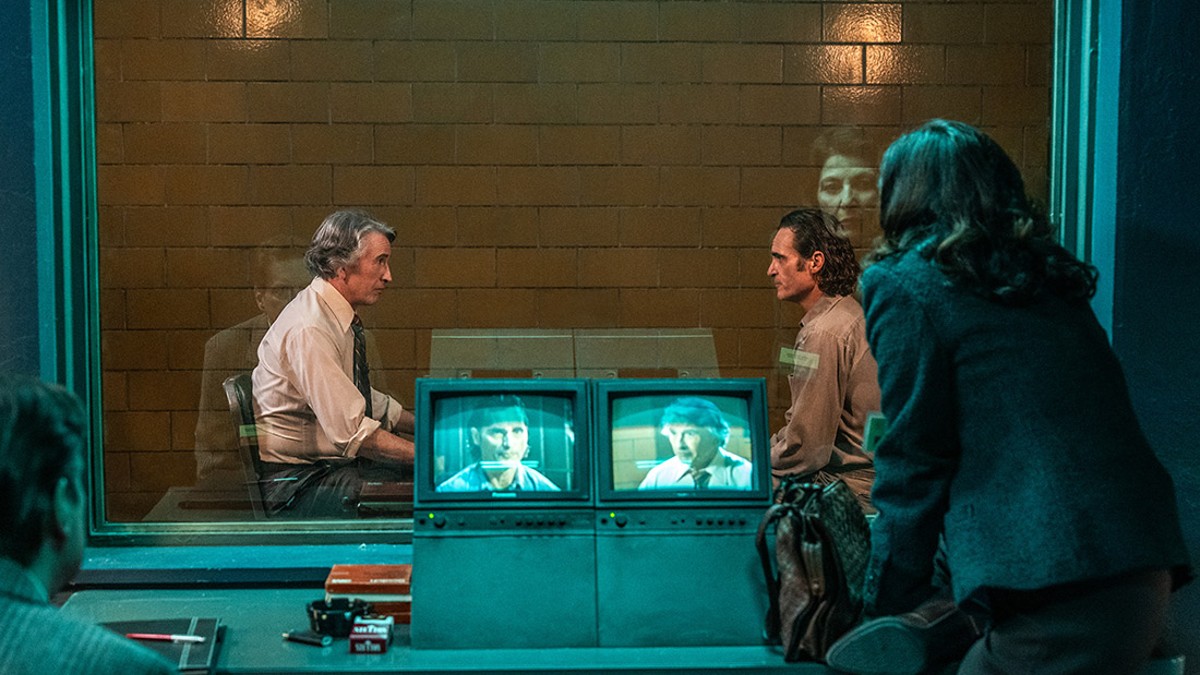
Criticism for Joaquin Phoenix’s second outing as Arthur Fleck has piled on thick and fast, currently holding a 32% audience approval rating on Rotten Tomatoes. Deviation from the source material and disrespect to the character of the Joker are cited regularly, as well as criticism of the musical numbers and the plot serving as little more than an epilogue to the original. Yet ultimately, these points are either intentional choices to reflect the mental state of Arthur, or fall down to plain ignorance of the viewer.
I just want to preface, I’m not coming at this as a pseudo-intellectual film reviewer who thinks Todd Phillips has invented metafiction. I understand that the ballsy moves Phillips and co-writer Scott Silver take won’t amuse everyone, because that’s exactly what they want to do. But that’s not what I want to discuss here, since the echo chamber of social media is already erupting with explanations of what the films set out to do.
Think of this as an open letter to the vast majority of you who were unsatisfied with Joker: Folie à Deux. Maybe I can change your mind.
Joker ended with Arthur on top of the world, a hero to the masses, and therefore many viewers have been disappointed to see Arthur humiliated and belittled the way he is in his latest outing. As a diehard DC fan, I can understand the hurt. Watching the Joker, an icon of cinema and a formative, terrifying figure from generations of childhoods, humiliated, presumably raped, and murdered isn’t easy.
But this reading misses the crux of what Phillips has established from the first minute of Joker. Arthur is nobody, and the idea that we as an audience truly believed he could have been the Joker makes us just as bad as Lee and society who forced it upon him. These films, hurt as it may to hear, were never about the Joker of Romero, Nicholson, and Ledger. They weren’t even about the Joker.

Just as Greta Gerwig did last year with Barbie, Todd Phillips has latched onto the clout that comes with an IP to send a social message in a film, a cautionary tale about partisan divide. Addressing failures of the social services, class discrimination, and mass protest, Joker was undeniably a politically charged piece. Look no further than Arthur’s similarities with Bernhard Goetz for an overt show of this: a figure revered for vigilantism, shooting four young men on a subway and sparking city wide protest. Sound familiar?
Joker: Folie à Deux is merely the original’s slightly more obnoxious cousin, touching the same ideas of political radicalisation. It just does it more blatantly, reminding those who idolised the original that mass protest and political divide accomplishes nothing, especially when latched onto a false idol – a message no more potent than today.
However, the echo chamber of social media, where many have expressed their views on this film, has created a vitriolic stink around this film. And to that I say, it’s entirely understandable that an actively fan-hating musical-cum-comic-book-movie is going to ruffle feathers. This should absolutely not put people off watching the film, though.
Sure, Joker: Folie à Deux underused the brilliance Lady Gaga brought to the role of Lee Quinzell. And sure, Todd Phillips makes some audacious moves that he arguably doesn’t have the refined filmmaking skills for. But the integration of some deeply depressing scenes where you truly feel for Arthur with incredible musical set pieces must be lauded.
Despite her limited screen time, Lady Gaga excels as Lee, bringing nuance in a convincing and manipulative performance. Once again, Phoenix crafts a heartbreaking, terrifying, and deeply intelligent performance as Arthur Fleck. Playing devil’s advocate, I would argue he exceeds his first outing, utilising the deeper palette of emotions at his disposal.
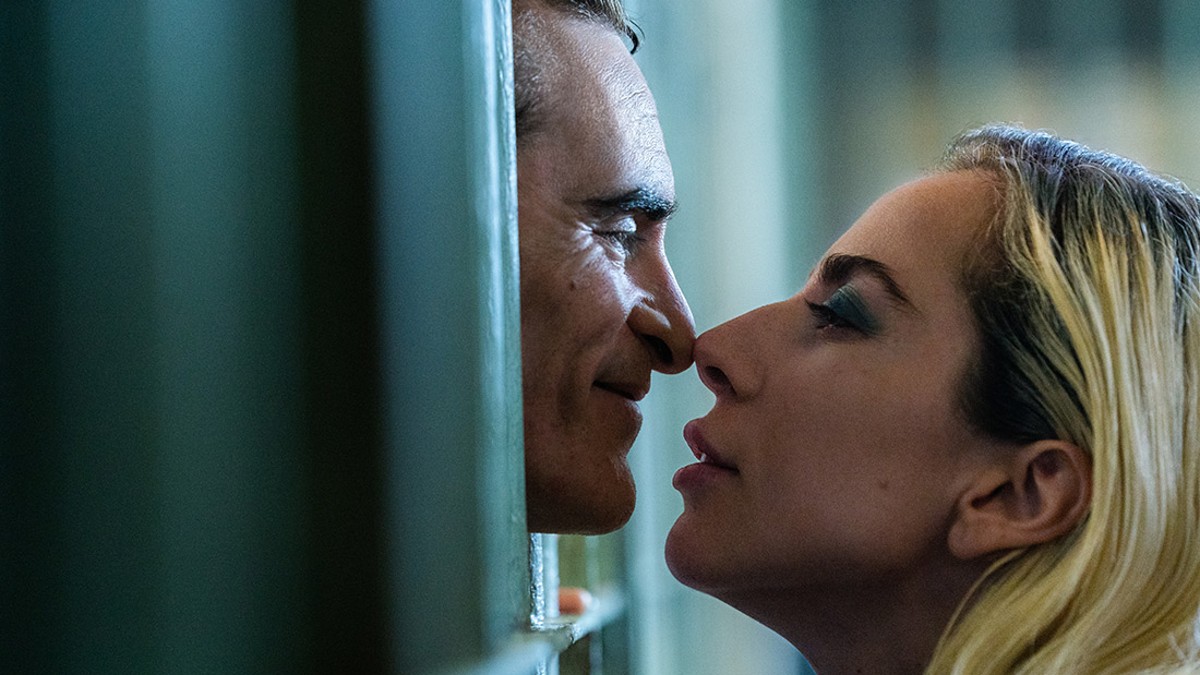
The two standout performances for me simply must be Brendan Gleeson as Jackie Sullivan and Leigh Gill as Gary Puddles. As expected, Gleeson brings his trademark gravitas to the role, presenting the most incredible scene-stealing performance that immediately took me back to the fear Clancy Brown cast as Captain Hadley in The Shawshank Redemption. But, as nobody expected, Leigh Gill’s miniscule screen time creates an incredible impact. It serves as the viewer’s grounding, stopping us getting carried away in the Joker and reminding us that Arthur’s actions really do have an impact.
The opening sequence, an animated feature signposting the Joker vs Arthur debate the film touches on, is incredibly well done. Phillips reminds us that this is a work of fiction right from the offset, breaking our immersion and allowing us to view the film more objectively. Masterfully animated by Sylvain Chomet, the short scene allows instant pity as we watch Arthur beaten down in an ironic Looney Tunes style, immediately establishing how gut-wrenching this film will turn out to be.
Once again, Lawrence Sher’s cinematography excels, as he carries across the foreboding and claustrophobia of Gotham City from the first film into the sequel. Hildur Guðnadóttir again establishes herself as the leading composer in Hollywood today, with a chilling score that shines against the upbeat show tunes, in what I’m sure will be recognised as an equal to her Oscar-winning first effort.
Every song feels well timed and intentional, too. In my opinion they enhance the plot, but I understand why a viewer who perhaps is not a fan of musicals would find them jarring. The choice to perform live when recording is one I truly believe has paid off, with Phoenix more so than Lady Gaga, experiencing flat notes and voice cracks and showing that, even in Arthur’s fantasy, he isn’t perfect. The musical set pieces themselves are very well executed, with a clever contrast between moody and dimly lit scenes. It’s reminiscent of 2002’s Chicago, with bright and exaggerated Sonny and Cher-esque performances.
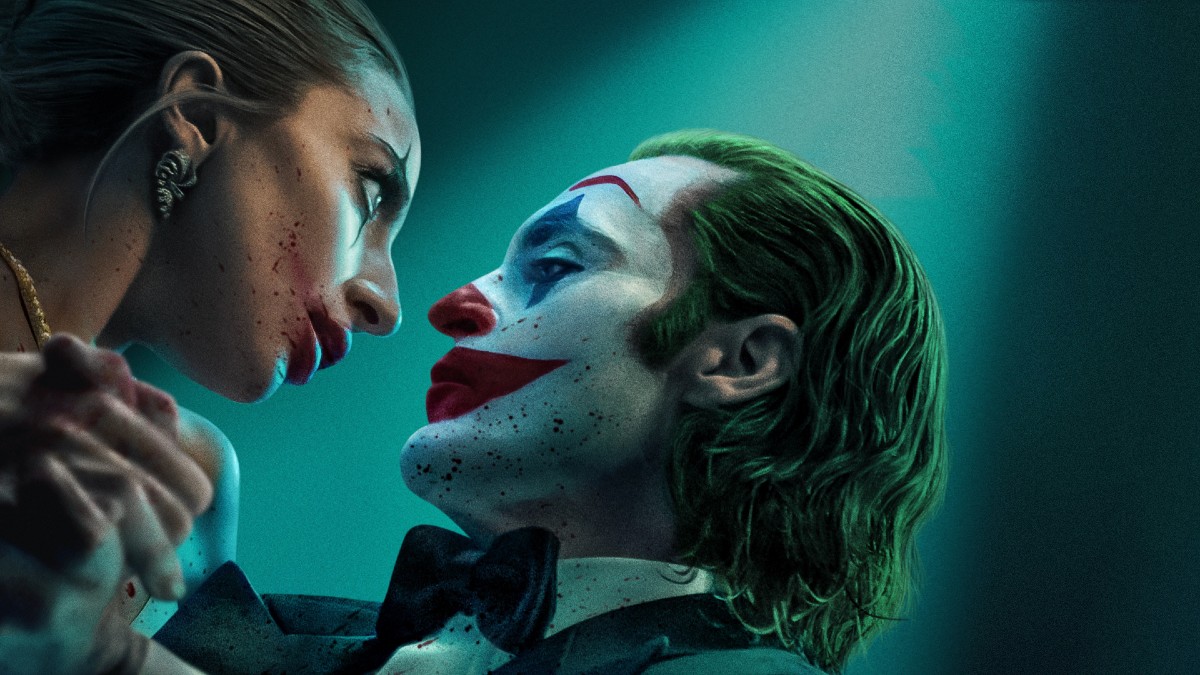
I will admit, Joker: Folie à Deux does feel like an epilogue to Joker, rehashing and punishing Arthur’s frivolity, yet I disagree with my fellow viewers completely. This doesn’t make it boring or unoriginal. Rather, it makes it real. Don’t get me wrong, we all would have loved to see Arthur wreak havoc on Gotham. But we were never going to see that, since that isn’t who he is, and it never has been, despite what the first would lead you to believe. While Heath Ledger wanted to watch the world burn, Joaquin Phoenix’s Arthur Fleck was forced to, getting caught in the flames of the revolution he inadvertently started and going down in the blaze.
Joker: Folie à Deux, in my opinion, is like a car crash in the best way possible. It’s hard to watch, yet I can’t take my eyes off of it. It’s divisive, what did we expect? As we have seen, the vast majority of viewers find Joker: Folie à Deux mediocre at best, but I truly believe that this film is easily an equal to its predecessor and even verges on superiority in many ways. I’m sure in a short time, audiences will return to Joker: Folie à Deux, no longer enraged with the disappointment they felt, and see an audacious, impressive, heartbreaking, funny, terrifying film.
So, it may not have been the sequel we all wanted, but we got what we fucking deserved.
 thatfilmbloguk